Approach & Visual Strategy
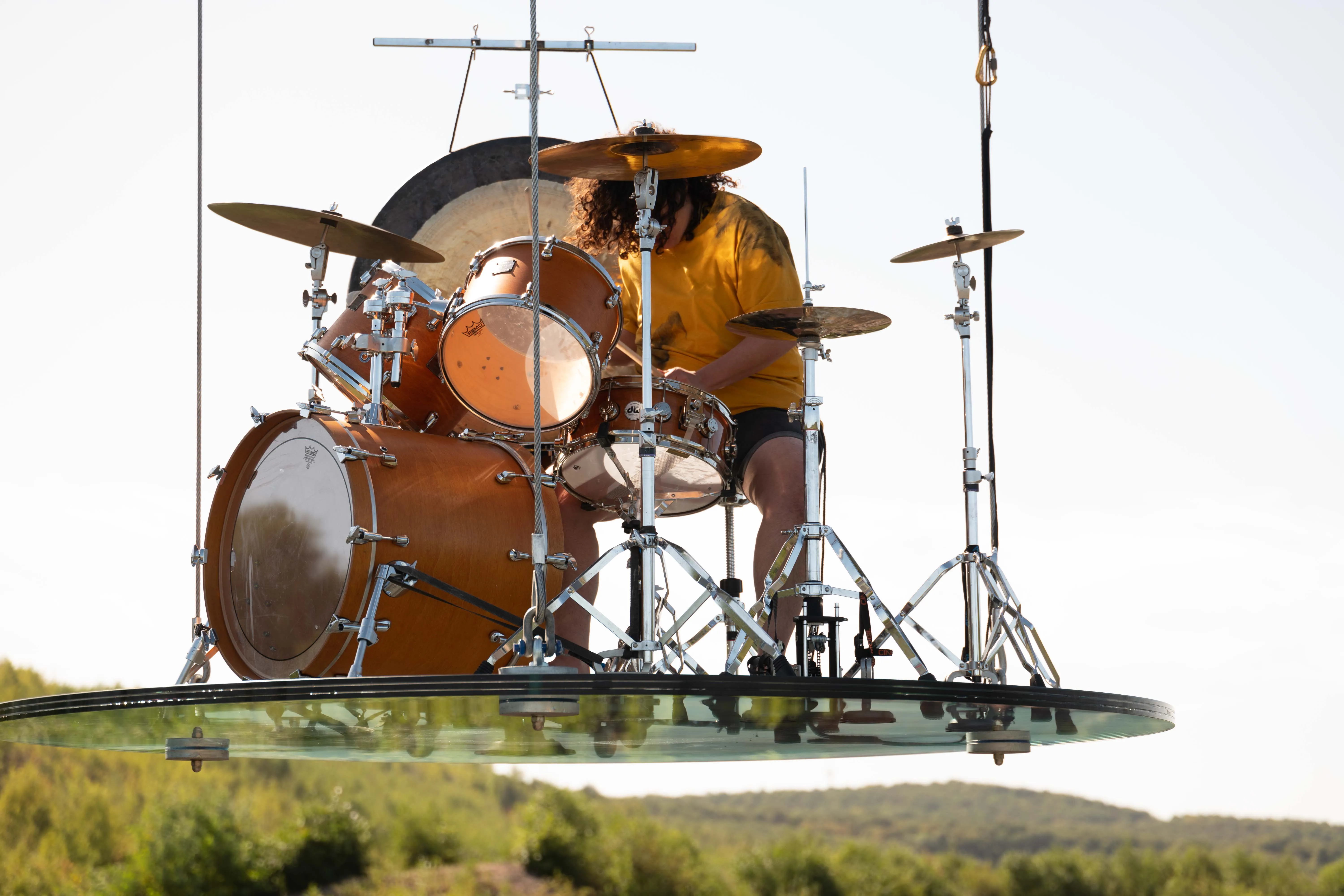
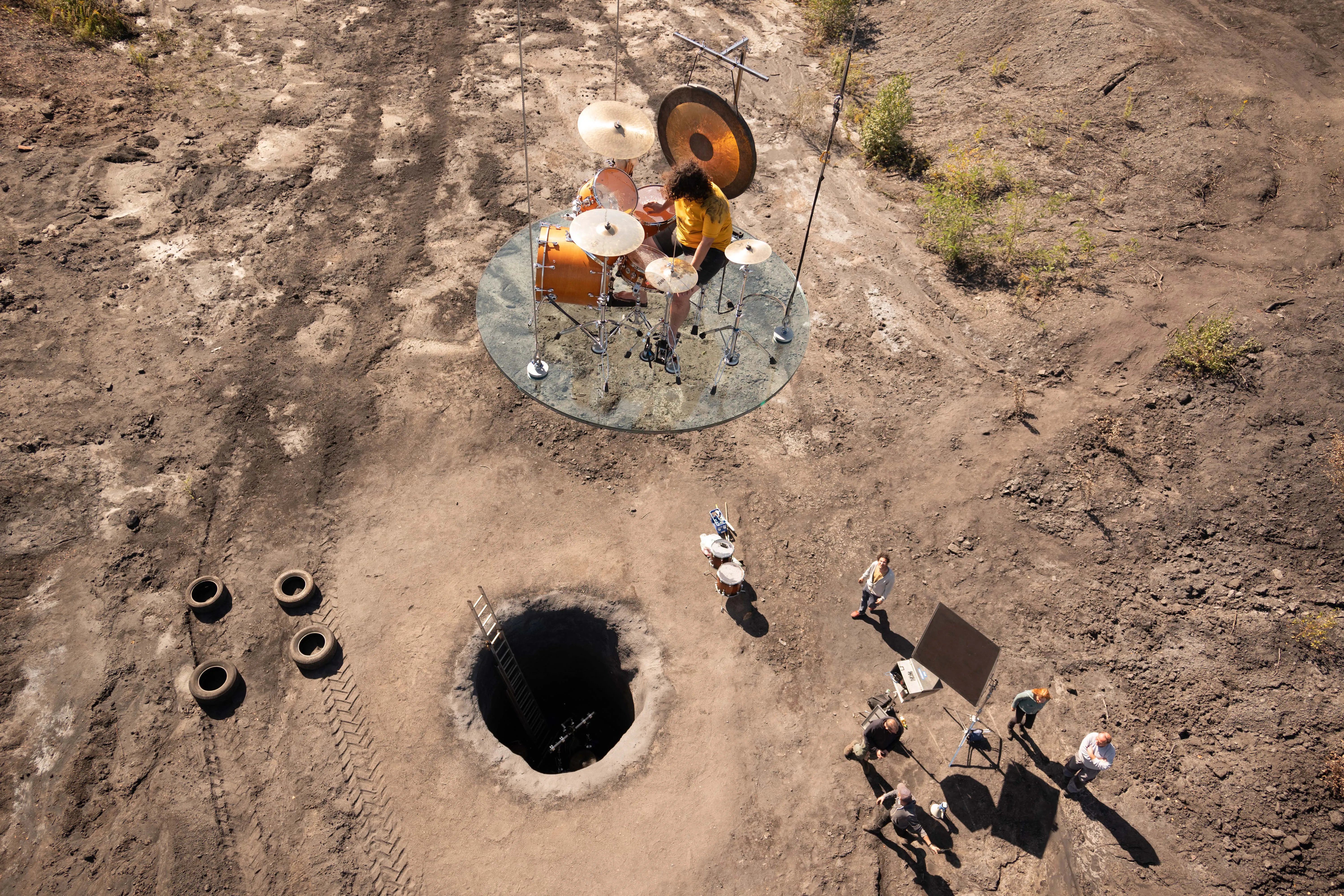
Drummerrsss was a clear reminder of how tightly image and sound can work together. I’d collaborated with Gilad and sound designer Daniel Meir many times before, so we came into this with an established workflow and trust - essential for filming a live, improvised performance between two drummers in extreme conditions: one underground, one suspended in the air.
To make this work, we needed a structure that would allow Gilad to compose the final musical piece in the edit, while also giving him the visual freedom to reflect the passing of the day — morning, afternoon, evening — across the three-screen installation. On top of that, we had only two days of shooting, the unpredictability of weather, and the logistical demands of building and operating the massive crane that lifted the sky-drummer.
“Drumming stems from a specific culture and it is related directly to the body, related to life and death… to have a pulse. That’s why I chose drumming, two drummers; one a few meters in the ground, and the other right above him.”
Gilad Ratman, Braverman Gallery - Interview on Drummerrsss
Our solution was a hybrid approach that balanced planning with improvisation.
Daniel Meir developed several rhythmic themes and musical frameworks the drummers could improvise on. During our location scouts, I identified five key camera positions for the main above-ground and underground setups - angles that would give us range, atmosphere, and clear shifts in mood and space.
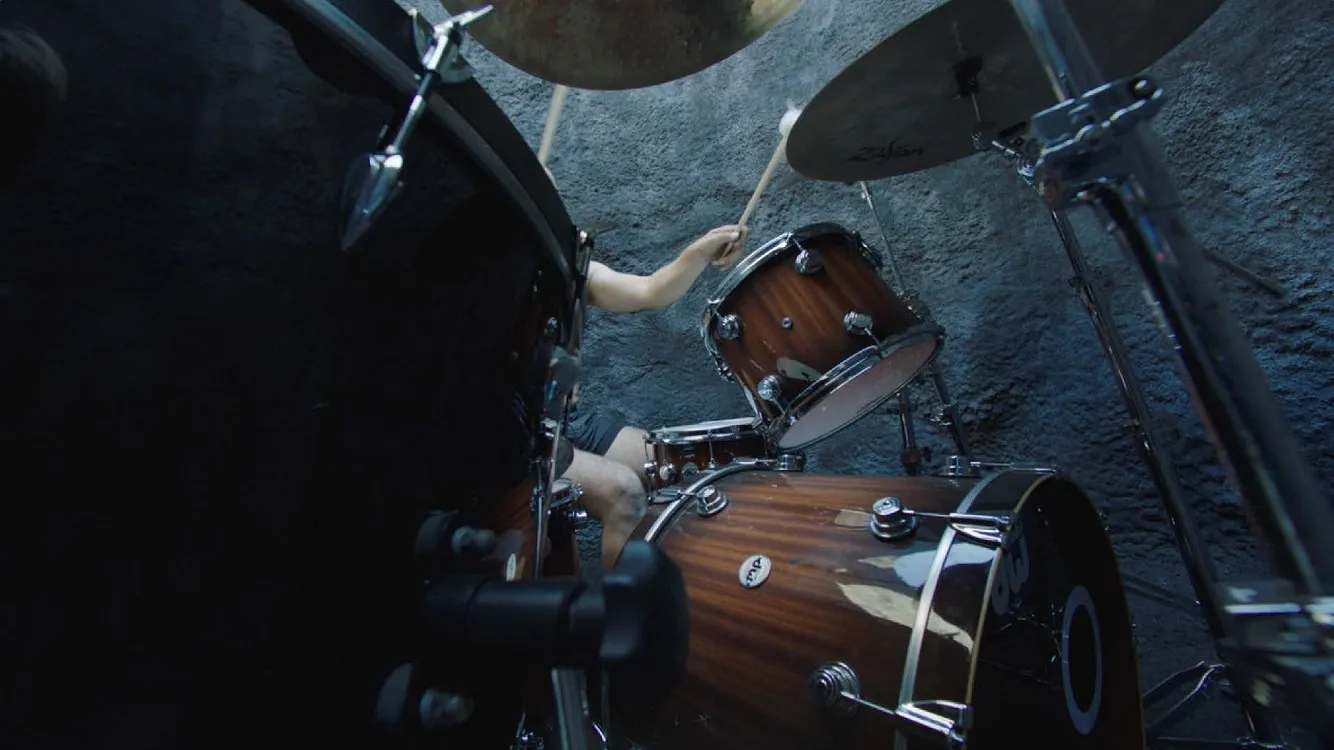
On shooting days, we moved methodically through these positions while the drummers performed each musical theme, capturing the material in different lighting conditions as the day shifted from morning to noon to dusk. This gave Gilad the flexibility to sculpt the final three-screen composition like a musical score rather than being locked to any specific shot.
In Drummerrsss, sound and image developed side by side. The performance, the camera, and Daniel’s sound work informed each other in real time and again later in the edit - one shaping the rhythm of the other. It was one of the rare projects where picture and sound truly evolved together, a genuine duet rather than one following the other.
Technical & Production Challenges
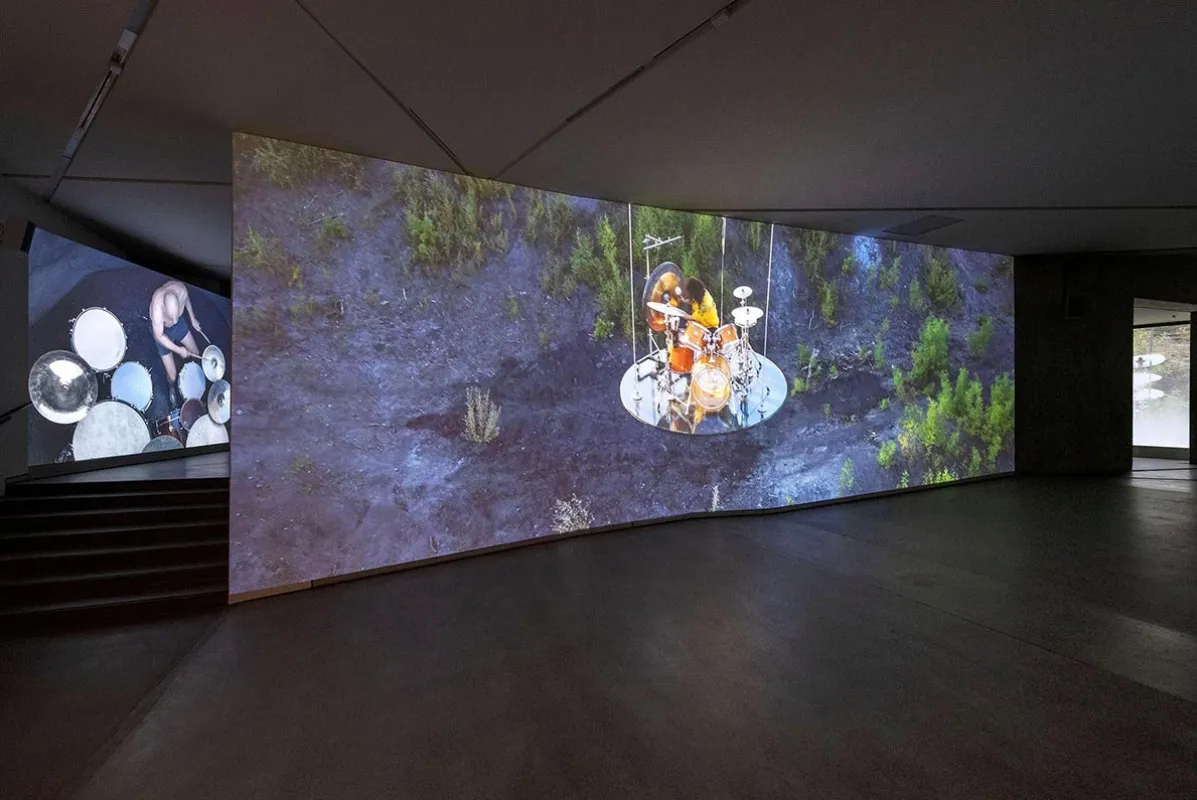
Drummerrsss was designed as a three-screen installation, and that alone created a unique set of technical challenges. Each screen had a different aspect ratio - one nearly square, another a narrow vertical channel, and one an enormous 11-meter horizontal screen viewed from extremely close range. Composing images that would function across such varied proportions meant rethinking standard framing logic. I leaned heavily toward center framing, keeping the visual weight in the middle of the frame so the footage could be adapted fluidly to the three different canvases without losing impact. The only exception was the pit sequence, where the environment dictated tighter, more enclosed compositions.
I knew early on that the installation needed a camera system capable of giving viewers a sense of full-frame immersion - something that could communicate both the landscape and the physicality of the drumming. We chose the ARRI Alexa Mini, which gave us the image quality and dynamic range we needed while remaining small enough to operate inside the confined underground space of the pit. It allowed us to move close to both drummers without sacrificing the scale or clarity required for the installation’s massive screens.
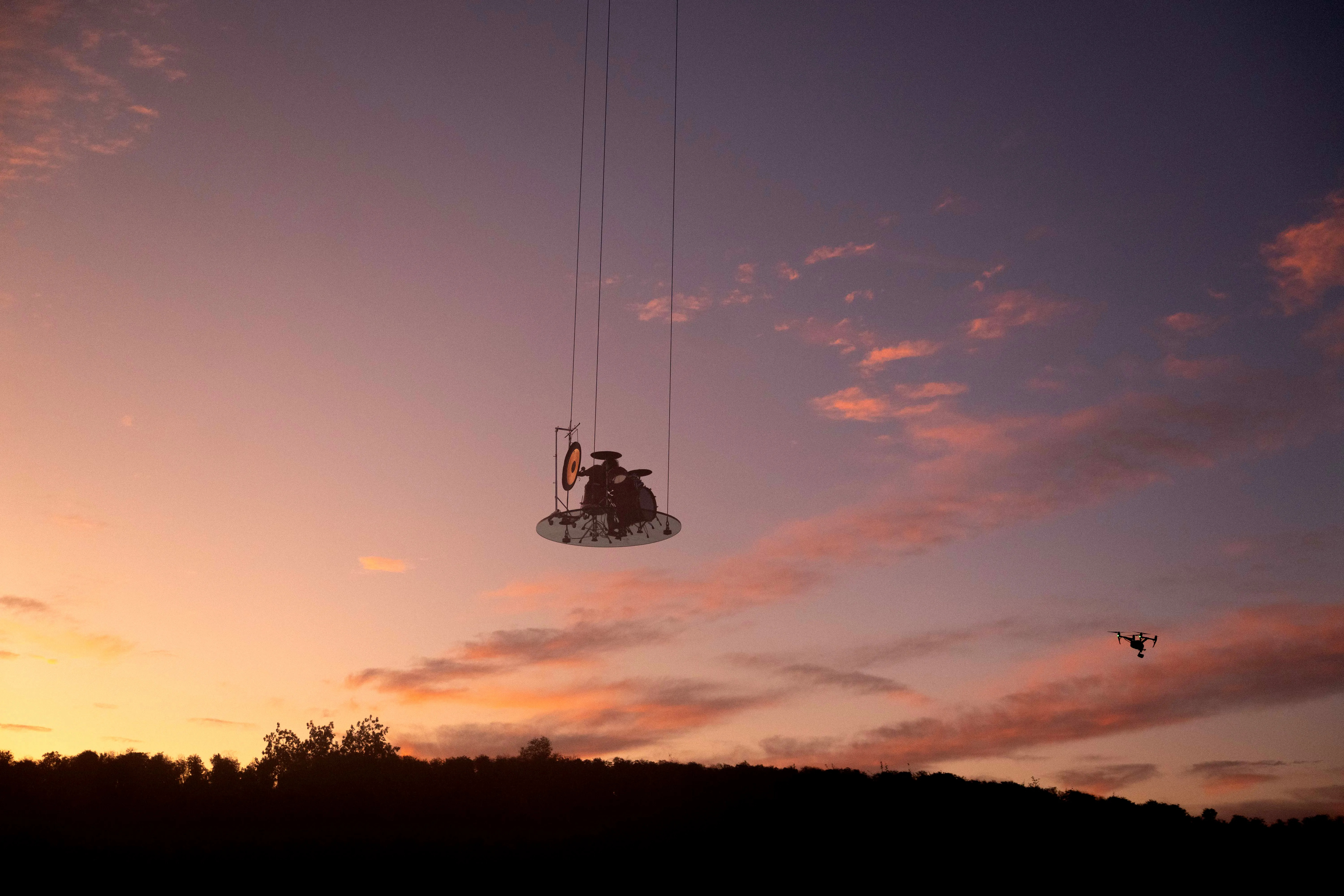
The contrast between the two drumming environments - one trapped in earth, the other suspended in air - also shaped our technical approach. In the pit, Haggai was shot primarily on tripod or controlled camera rigs, grounding the sequence in the claustrophobic weight of the space. For Alejandra’s performance above ground, we introduced drone cinematography (operated by Lior Tamim) to create a deliberate counterpoint: fluid, sweeping motion that visually opposed the immobility of the pit. This interplay between static and aerial images became one of the installation’s defining visual rhythms.
Insights & Impact
Drummerrsss was commissioned as part of the Jewish Museum Berlin’s permanent exhibition - a work intended to remain on view for a full decade (2020–2030). Knowing it would be seen daily by a wide, constantly changing audience shaped my approach from the start. The cinematography needed to produce images that would endure: immersive, technically robust, and capable of holding up to repeated viewing over many years.
The installation sits at a major junction of the Libeskind building, where thousands of visitors pass through. The work had to become part of the space rather than simply projected into it. With three radically different screen proportions and a ten-year display, every visual decision had to serve both the immediacy of shooting and the long-term life of the piece.
Collaboration & Practice
Working across multiple projects with Gilad Ratman over many years has deeply shaped how I approach collaboration and image-making. His work insists that image, sound, and space are developed together — not layered after the fact, but conceived as a single, interdependent system. Just as important has been his fearlessness in leaving room for spontaneity, even at large scales: trusting intuition, allowing the work to breathe, and letting form emerge through process rather than control. That approach has influenced how I work far beyond this piece, reinforcing the value of openness, trust, and intuition alongside technical precision.